
 Menu
- Minicomputer(81)
- Microcontroller(89)
- Electronic(536)
- Enclosures(8)
- Cooling(22)
- Sound and acoustics(12)
- Minicomputers(3)
- Memory cards and disks(6)
- Sensors(60)
- Voltage regulators(42)
- Assembly electronics(79)
- Programmers(12)
- Displays and screens(28)
- Buttons and keys(23)
- Starter kits(8)
- Diodes(8)
- Converters(29)
- Power supply(60)
- Gadgets(1)
- LED lighting(12)
- Relays(25)
- GSM modules(4)
- Motor and servo controllers(14)
- Communication(64)
- Servo(5)
- Smart Home(2)
- Services(0)
- New products

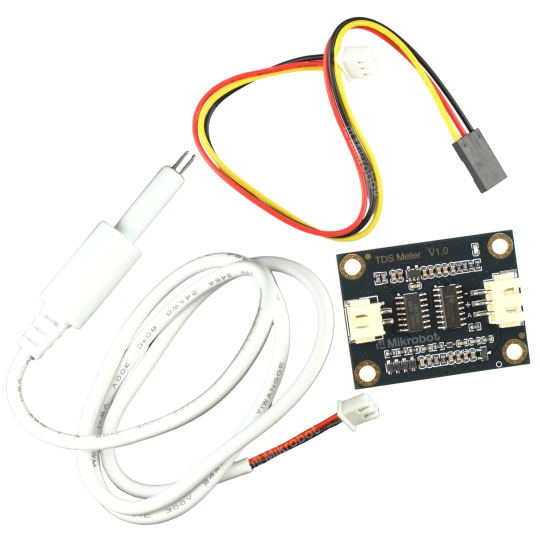
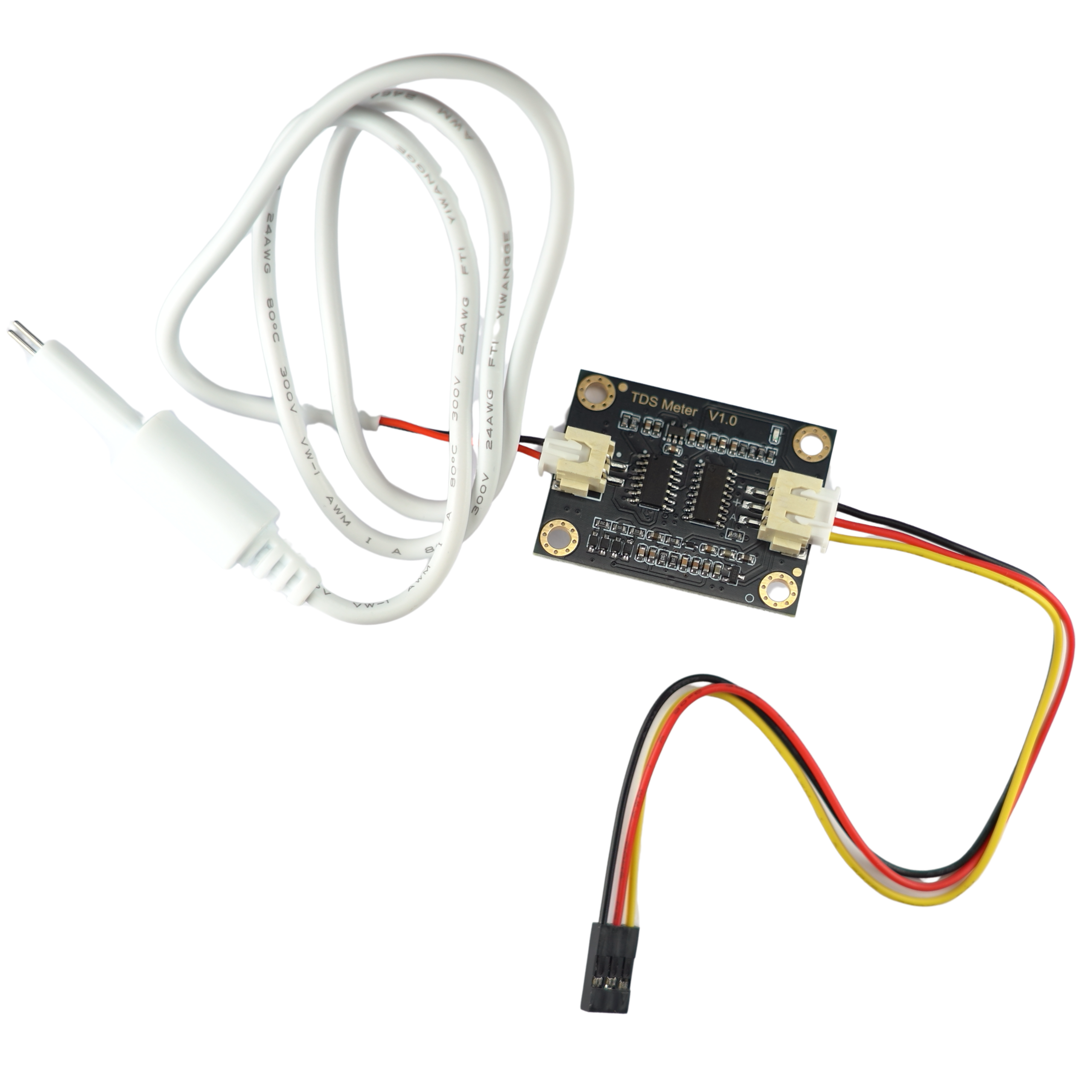
Czujnik jakości wody TDS tester analogowy moduł z sondą 3.3V-5V do Arduino
 0
Description
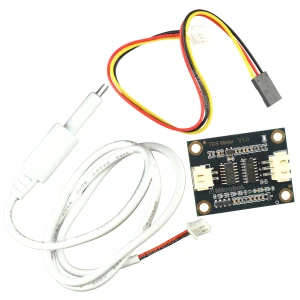
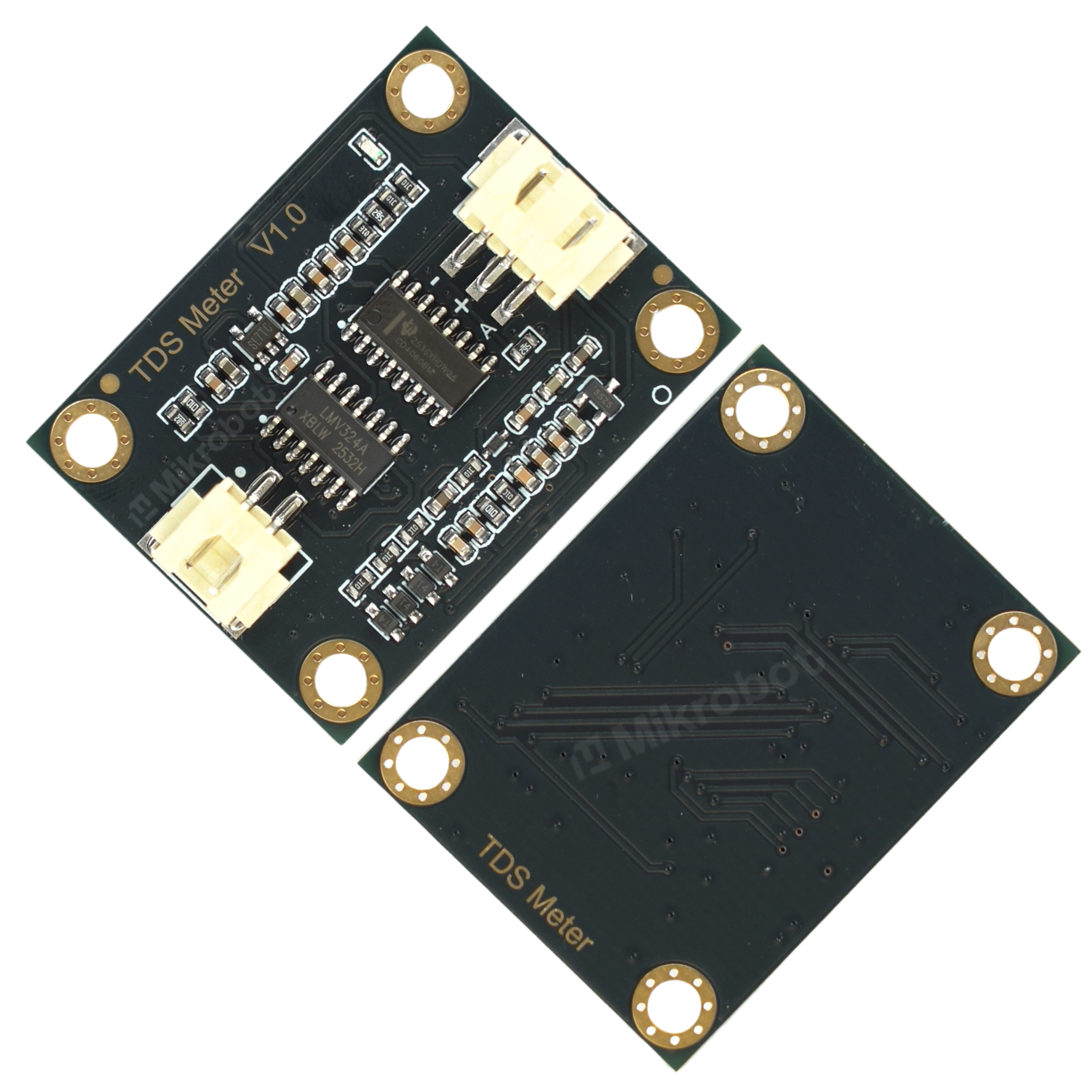
Analog TDS water quality sensor 3.3V-5V
A module with a probe designed to measure the TDS (Total Dissolved Solids) parameter in water, which indicates the amount of conductive particles in the tested solution. This indicator reflects the overall content of mobile charged ions, such as minerals, salts, and dissolved metals. A high TDS level typically indicates the presence of significant amounts of chlorides, sodium, and potassium, which directly corresponds to the purity of the liquid.
The circuit features a wide supply voltage range from 3.3V to 5V DC and an analog output signal in the range of 0V - 2.3V. Thanks to these parameters, the sensor is fully compatible with most popular platforms and works perfectly as a measurement component for Arduino, for ESP32, for ESP8266, and, with an analog-to-digital converter, also for Raspberry Pi.
Benefits of using the module
- Universal power and signal - operation in the 3.3V - 5V range and a 0 - 2.3V output enable direct cooperation with both 3.3V and 5V logic circuits.
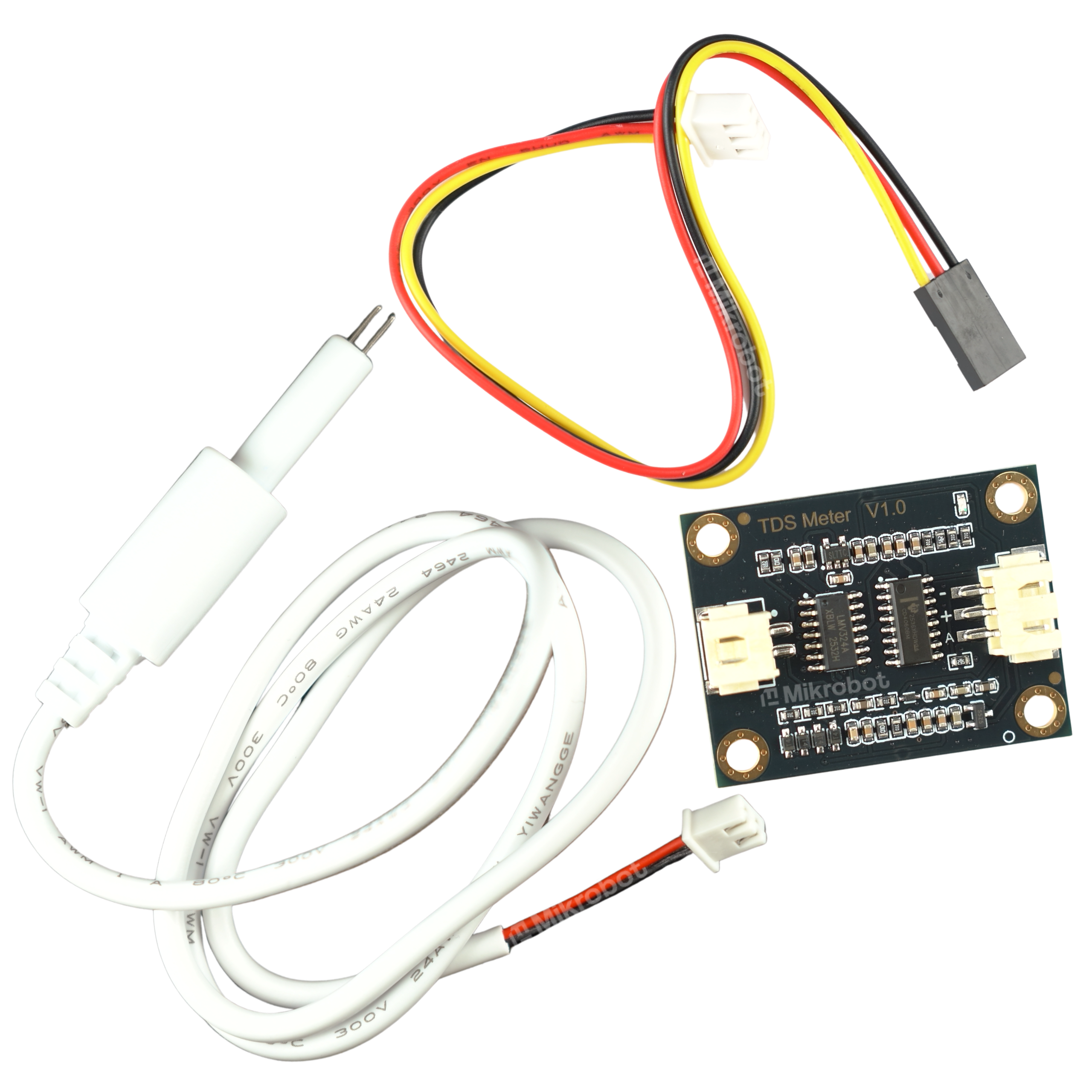
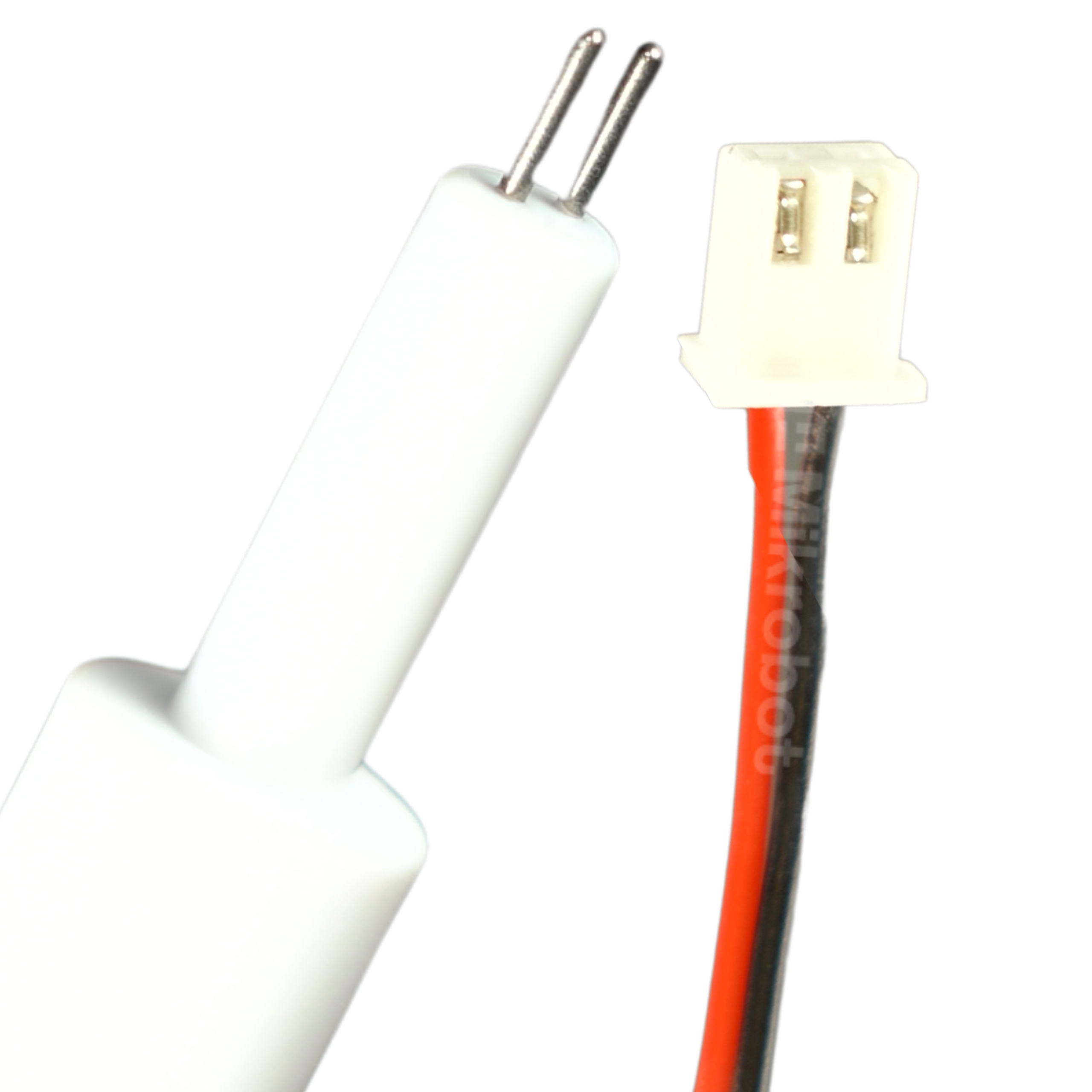
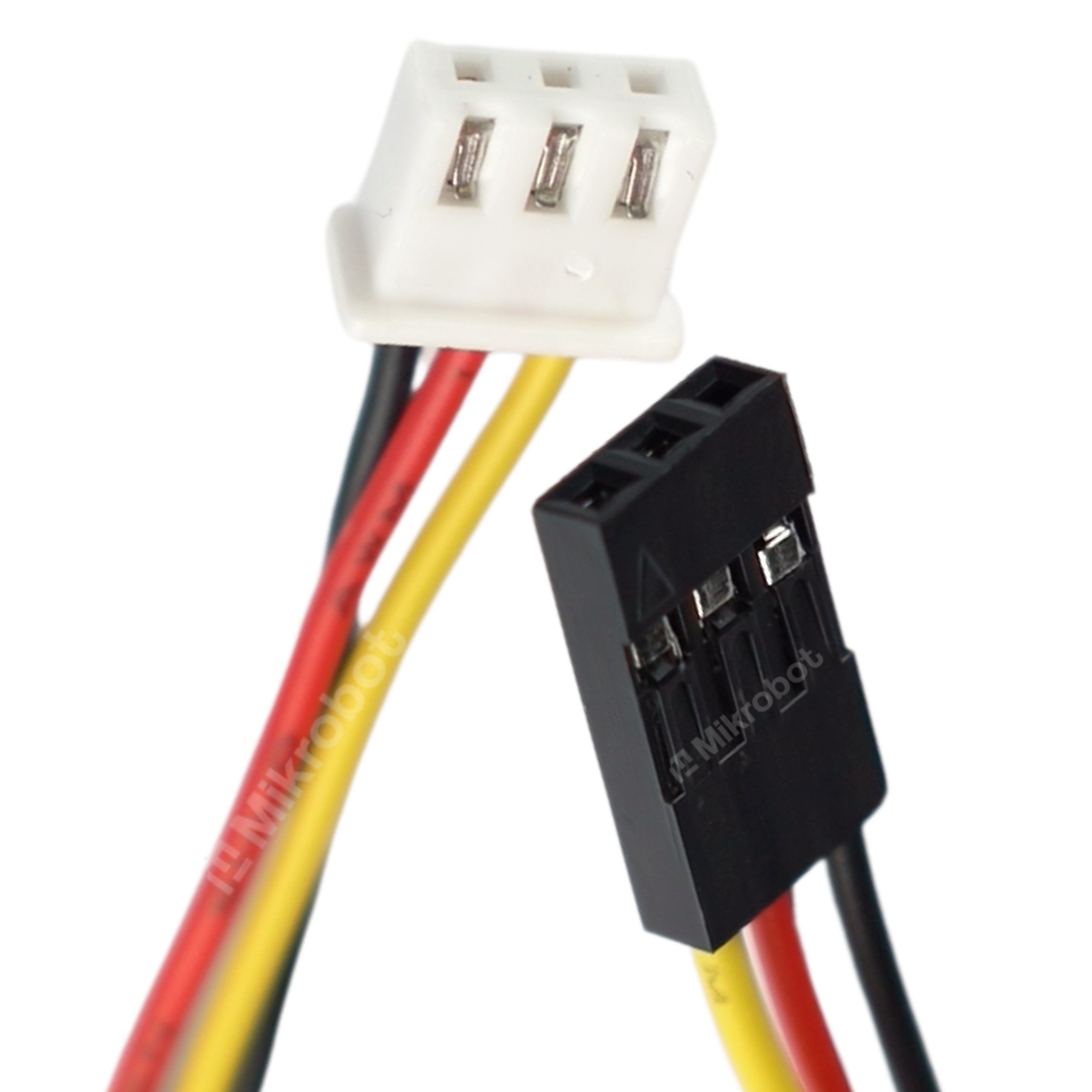
- Solder-free installation - the connecting cables and the measuring probe are equipped with dedicated plugs (PH2.0-3P and XH2.54-2P), allowing for quick setup of the kit.
- Polarization protection - the measurement method implemented in the module effectively prevents probe polarization, which extends its lifespan and stabilizes readings.
- Waterproof probe design - the measuring sensor can be safely immersed in the tested solution for a long time, enabling continuous monitoring.
- Low power consumption - the circuit draws only about 5 mA, making it a suitable choice for battery-powered systems.
Example applications
- Drinking water quality monitoring systems and verification of reverse osmosis (RO) filter effectiveness.
- Automatic water parameter control systems in freshwater aquariums.
- Monitoring of nutrient and fertilizer solution concentrations in hydroponic cultivation.
- Home research stations and building automation systems (Smart Home).
- Educational, laboratory, and research projects based on microcontrollers.
Proper measurement guidelines
To obtain precise and repeatable results, several operating guidelines should be followed. The measuring probe must not be used in water exceeding 55°C. Because the TDS value depends on the liquid temperature, the most optimal measurement conditions occur at 25°C. During testing, the measuring element should be kept away from the bottom and walls of the container, as their physical properties may distort the reading of the solution's conductive properties.
Key technical specifications
- Supply voltage: 3.3V - 5V DC
- Current consumption: approx. 5 mA
- Output signal: analog 0V - 2.3V DC
- TDS measurement range: 0 - 1000 ppm
- Measurement accuracy: ±10% F.S. (at 25°C)
- Maximum probe operating temperature: 55°C
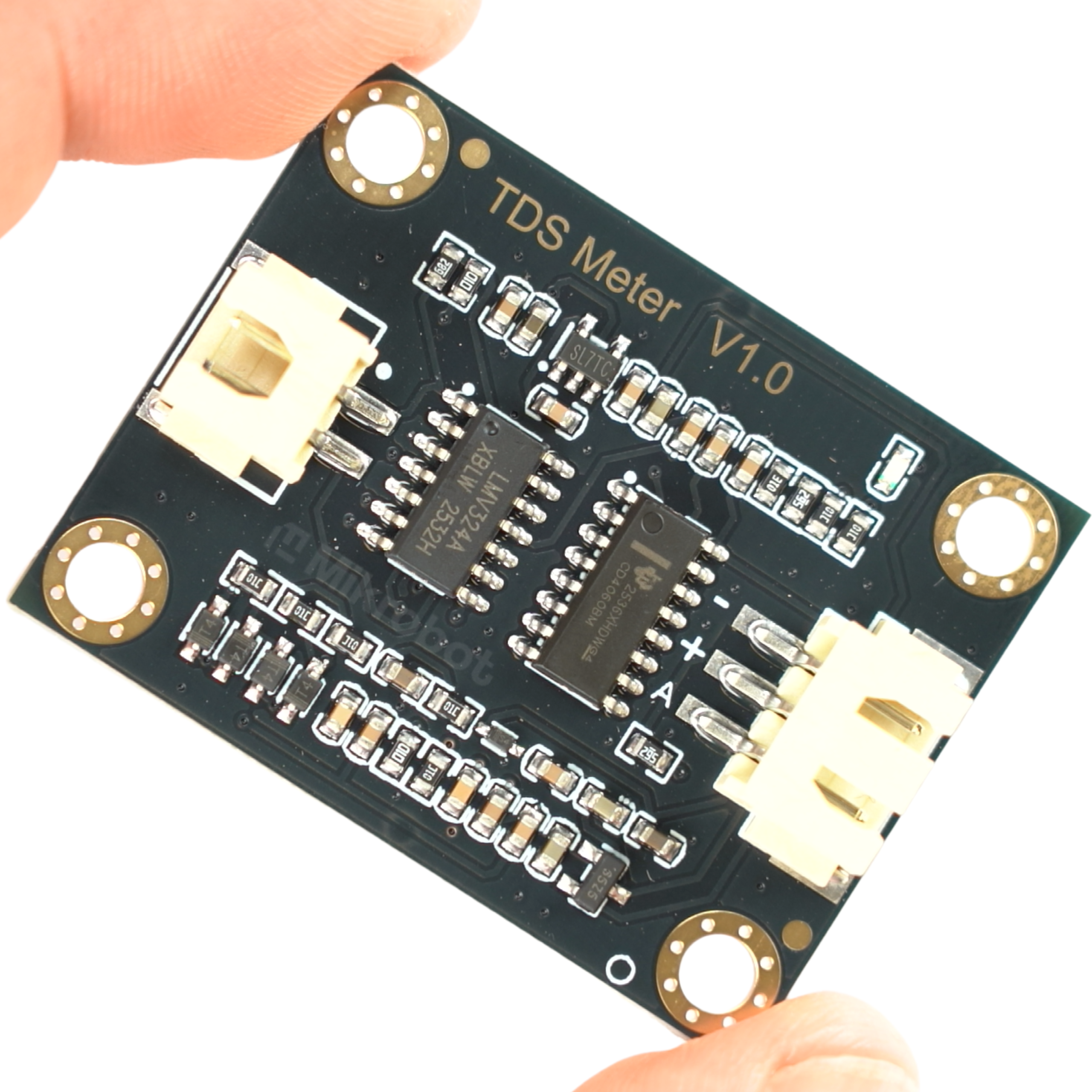
- Module communication connector: PH2.0-3P
- Measuring probe connector: XH2.54-2P
- Probe cable length: 60 cm
- Module board dimensions: 42 mm x 32 mm
Good to know
The sensor registers the total amount of dissolved ions (such as minerals, salts, or metals), making it excellent at detecting any changes in the chemical composition of water. It should be noted, however, that the device does not respond to non-conductive substances, including organic contaminants or bacteria. Therefore, to obtain a complete assessment of water potability, the TDS measurement should be supplemented with additional physicochemical and microbiological tests.
Product reviews (0)

All reviews (positive and negative) are displayed. We don't verify that they come from customers who have purchased the product.